Mr. G Sings Gospel

Sitting in the guidance office at the end of the week, I listened as some of the staff, exhausted, relayed stories of the challenges at the school; too many children with too many needs; parents, many single parents, struggling to make ends meet AND rise above their own issues to help their children succeed; staff who don’t have time to even get a drink of water during the course of the day, much less have a restroom break.

I did a bit of volunteering to help run the school store that afternoon.  Teachers lined the kids up in the hallway, all their heads craning to see what was on the tables – small toys, decorated pencils, little pieces of candy, cards for ‘special time’ with various teachers.   The kids can buy these items for a certain number of tickets – tickets they have earned during the week for exhibiting good behavior.  They also have an option to bank their tickets.   One volunteer was busy with a massive list of all students, taking note of the number of tickets each child had, and congratulating them on looking forward, thinking about the larger toys they will be able to buy if they save a bit.

The kids were uniformly excited, as elementary kids are, about the prospects.  Fast hands moving quickly across the boxes of goods, eager eyes, tattered clothes, dusty hair.  All with a smile.

After dismissal and the last buses roared away, Mr. G came by the doorway of the counselor’s office.  He is the janitor – an older man with graying hair and beard.  We said hello, and he stammered back his greeting – he has a strong stutter.  We waited patiently as he got his phrases out, him smiling as he spoke, apologetic for the pace.

Some of us launched into celebratory song – for it was the end of an exhausting week.  Mr. G’s eyes lit up.  He was impressed with our attempt (I’d say) at singing an early ’80’s disco tune.  Then, with his broken cadence, he let us know that he, too, was a singer.  I admit feeling awkward at that moment, not wondering where this would lead – a man with such a stutter, pushing the garbage can and broom.  We invited him to share.

He paused, and looked upward, then closed his eyes.

The most beautiful song came from him – perfectly sung, flowing flawlessly and elevating across a range none of us could believe.

Tears welled up in my eyes.  We were all silent when his last note was done, and I stood, gave him a hug, and thanked him.

Posted in Ramblings | Tagged , , , , , | Leave a comment

The Real Question on Blending

Blending.  Blends.  Blender.  Settling in with a cup of freshly pressed coffee (a new routine for me) that is a blend of Colombian and Arabica.

We talk about blending in education (blended learning), and most of the time I have a problem with the way we talk about it.  As of this writing the Wikipedia definition reveals what is commonly considered – blending as a mix of ‘traditional’ classroom with some online / e-learning elements.  Driving the conversation is often a presumption that:

  • Classroom is best for when you need people together
  • Online or e-learning is what you do on your own (asynchronously)

Wrong.  We should begin with the real question:  What parts of the learning experience are best addressed synchronously and what parts are best addressed asynchronously, and only then consider modality.

Today’s technology provides a number of great virtual venues for bringing people together all at once, to have shared experiences, to take a deep dive with an expert on a particular subject, to practice skills and get team feedback from a coach, etc.  We also know that often a learning design includes a social networking component to bring disparate parties together (in the case of creating culture), and also personal coaching and feedback on development assessments.  These are very good reasons to bring people together physically.  But let’s not jump to the conclusion that plane tickets must be bought!  Thoughtful applications of virtual classrooms / webinars, 3D immersive spaces, and even really innovative uses of teleconferencing can provide your learners with the opportunity for group dialog, problem-solving, coaching and feedback that they need.

It’s hard to think of a learning situation in which you would not want to provide preparatory material of some sort – be that a podcast series, a list of articles, an introductory video, some data-gathering tools, etc.  Similarly it’s tough to think of a learning situation in which you would not want to provide your learners with resources to help them after the shared, live experiences are done.  These are some of the reasons we should consider e-learning tools for asynchronous learning.  So here’s my simple list of examples:

Asynchronous:

  • Data collection (assessments, evaluations, local observation data, etc.)
  • Core content topics (frameworks, concepts, examples)
  • Networking (profiles)
  • Discussion (questions from experts for debate)
  • Performance support tools
  • Content updates

Synchronous:

  • Team work
  • Skills practice with coaching
  • Group Q/A sessions with experts
  • Facilitated peer-feedback sessions
  • Networking / culture-building

So let’s free ourselves a little to think about blending independently from modality.

Enjoy your coffee.  Or tea.

Posted in Education | Tagged , , , | 1 Comment

Digital Footprints – Remembrance

When we leave this earth, what traces do we leave behind?

I can pick up the Sunday paper – I had one delivered to my house – and can read the obituaries and learn a few bits about someone’s life.  Something about their character, their accomplishments, and those they left behind.  All of this composed in a predictable way by a family member or friend for the public to read and know.  And it’s typically very impersonal.

Recently, there have been a couple of instances of the deceased leaving a much more intimate, and immediate, trail behind them.  Facebook profiles still waiting for the next status update; blogs with entries that herald something more coming; profiles in social media that still present the person just as they were – or are – in the minds of those who don’t know.

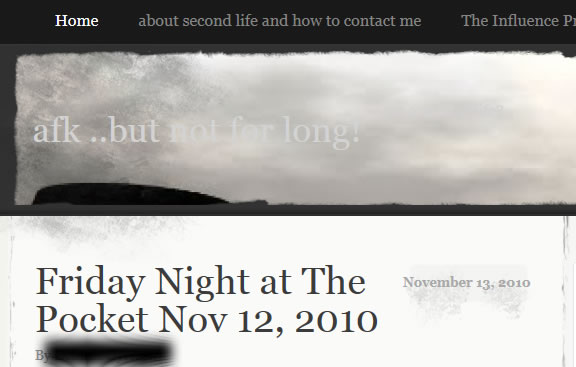
Snapshot:  “Barbara”, whose blog has a post just over a week prior to her death.  No mention of any illness.  The marquee on her blog:  “afk, but not for long!” with a subtitle “got a second life?”.  Links from her blog take you to her VodPod video collection.  Another link takes you to her Facebook profile – her info page still alive with the last touches.  It’s not until you see her Facebook wall that you see the trend in messages – “miss you”, “lonely without you”, and even “happy birthday, we miss you”.  Even a link to her presence on the Fastcompany “influence project” list.

Traces of our networks, the trail of our travels, our relationships – moments in our lives captured, tagged, and connected like so many still frames on display, extending across a virtual bookcase.  The absence of those who have passed is now felt by a much larger audience.

Last post dates become more distant, friend requests receive no answers, activity meters dwindle, but what happens to the information?  It may make us ask, “What kind of trail do I want to leave?”  And, “To whom might I give the rights to my digital identity?”


Check out this interesting article by Rebecca Rosen about the ‘permanence’ of Facebook.

Posted in Ramblings | Leave a comment